
Compute Chips
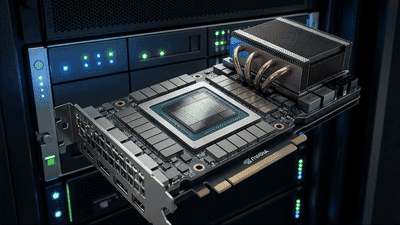
Nvidia Rubin’s 288GB HBM4 Configuration: Memory Bandwidth as the New Compute Bottleneck
An AI accelerator can contain extraordinary arithmetic capability and still spend valuable time waiting for data. That gap between what a processor can calculate and what its memory system can supply is central to Nvidia’s Rubin architecture.
Groq Acquisition Integration: Nvidia’s $20B Bet on Ultra-Low Latency Inference
Nvidia’s Groq deal is a statement about where AI computing is going next. Building larger models remains important, but delivering answers quickly—and doing so repeatedly, predictably, and economically—is becoming a distinct infrastructure problem.

Chiplet Design Wins in AI Accelerators: The D2D Interconnect Standard Battle
The next AI accelerator does not necessarily need to be one enormous piece of silicon. It can combine compute tiles, an I/O die, memory interfaces, and specialized engines within a single package. That opens architectural possibilities—but creates a new problem: the pieces must communicate without consuming the performance and efficiency they were assembled to deliver.
Edge NPU Adoption in AI Phones and PCs: 40% Penetration Milestone Reached
AI acceleration is moving from a premium feature toward an ordinary part of personal computing. More phones and PCs now include hardware designed to run neural-network workloads locally, giving manufacturers another way to improve responsiveness, manage power, and introduce software features.
ASIC vs. GPU in 2026: Broadcom’s Custom Silicon Order Book Reveals the Shift
The AI chip market is becoming more diverse, not simply replacing one processor with another. GPUs remain valuable for programmable computing, while large customers increasingly commission custom accelerators that reflect their own workloads, infrastructure, and economics.
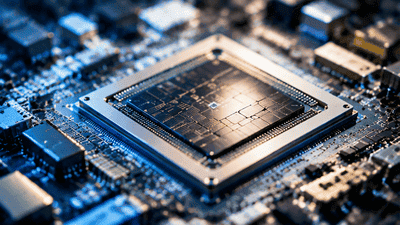
OpenAI’s Custom Chip with TSMC: The First Major LLM Company Going Silicon
OpenAI is moving deeper into the hardware beneath its models. Instead of relying exclusively on processors designed for a broad market, it is helping create silicon around the workloads that power its own products. That is a significant change in responsibility: the company is no longer only a customer of computing infrastructure, but also a participant in defining it.

Inference Era Pricing: Why LPU Architecture Targets the Token Generation Bottleneck
The price of an AI response depends on more than how much arithmetic a chip can perform. It depends on how quickly the system accesses data, how efficiently it schedules requests, and whether the resulting answer arrives within the application’s time limit.

China’s TPU Breakthrough: How Zhonghao Xinying Filled the Pure TPU Architecture Gap
China’s AI chip industry is often discussed through GPUs and neural-processing units. Zhonghao Xinying offers another route: a processor designed around tensor computation, supported by its own instruction set and computing platform.

More Threads and Biren’s GPU Iteration Race: China’s General-Purpose AI Compute Path
China’s domestic AI hardware effort is not following one architectural route. Some companies emphasize specialized neural processors. Others are pursuing programmable GPUs that can support a broader mix of training, inference, and general computing workloads.
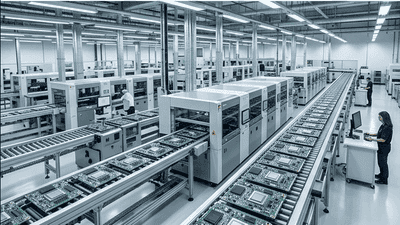
Nvidia’s $1 Trillion Revenue Target by 2027: Behind the AI Factory Transformation
Nvidia’s trillion-dollar ambition is not a forecast of $1 trillion in revenue during the single year 2027. It is a statement about the cumulative business opportunity associated with Blackwell and Vera Rubin through that period—and about the scale of infrastructure customers may need as AI moves into continuous operation.